Blog · What it costs
Fixed price or hourly rate: which suits you, and why
Paying by the hour seems the fairest option: you pay for the work done. And it’s exactly the opposite of what suits someone who won’t be there watching.
 By Sergio Domínguez8 min read
There are two ways to hire gardening work: by the job (a fixed price for leaving this like so) or by the hour, so many a day or so many a week.
Almost everyone feels the second is fairer, because you pay for exactly the work that was done. And in this area, in most cases, it’s the one that suits you least.
What you’re really buying
The difference between the two isn’t the money. It’s who swallows it if the job runs over.
The same job, paid for in two ways
At first sight, the fixed price looks more expensive. And it is: it asks a little more than the hours would come to if everything went to plan. That’s why the instinct is to turn it down.
But the job hardly ever takes as long as planned. Roots turn up where nobody expected them, the hedge was worse than it looked, it takes two trips to the recycling centre. By the hour, you pay for that, and nothing puts a brake on it.
The fixed price hasn’t moved: that’s what it was for. That little extra it asked for at the start is what it costs for the risk to be theirs and not yours. When the job can be defined, it almost always pays off.
A fixed price always asks for something more than the optimistic count of hours, and it isn’t rounding up: it’s the margin that whoever signs it uses to cover what can’t be seen from outside. If there are roots where none were expected, if the hedge was worse inside, if it takes two trips to the recycling centre, that problem is theirs.
By the hour that margin doesn’t exist, and that’s why it looks cheaper on paper. But the risk doesn’t disappear either: it has moved, and now it’s on your bill.
Why that counts for more here
This is the local part, and it has nothing to do with the garden and everything to do with who’s watching.
On much of this coast the owner doesn’t live here. They see the garden three or four times a year, and the rest of the time the work is done with nobody there. Hours work when someone can see the pace of the work, and here, very often, nobody can.
It’s worth saying without drama: it isn’t a question of honesty. It’s that an hourly rate with nothing to limit it has no built-in brake. A day gets through what it gets through, and if nobody compares it with anything, nobody notices (not even whoever is doing the work).
It’s the same reason why, in this area, a report with photos isn’t a nice extra but the only way to see your own garden. We tell the whole story in gardeners in Calahonda, which is where it shows most.
When hours do make sense
They aren’t always a bad idea, and there’s one case where they’re clearly the best option: when genuinely nobody can know the scope until the work starts.
An abandoned plot where you can’t see the ground. A first clearance where nobody knows what’s underneath. A “come for a day and do what you can, starting with this”. In those cases, asking for a fixed price forces the gardener to build in a big cushion (because they’re gambling the day), and you end up paying for that uncertainty even if it never materialises.
There, hours are honest. But only if they come with two things.
The two conditions that make them safe
A cap. “A maximum of so many hours or so many days; if more is needed, we stop and talk.” Without a cap it isn’t a quote, it’s an open tab. With a cap, you already know today the worst that can happen.
A record of the work. What was done each day and, if possible, photos. It doesn’t need to be anything formal: a message with four lines and three photos will do. What matters is that it exists, because that’s what turns the hours into something you can check.
With those two, hours stop being a blank cheque. Without them, they are one even if the gardener is excellent.
What works best almost every time
The combination. A fixed price for everything that can be defined (the maintenance pass, the hedge, the palm, clearing an area of known size) and a capped bank of hours for what can’t.
That way the predictable has a firm price and the unpredictable has a ceiling. It also makes the quote comparable: when you ask for three, you can put the fixed items side by side, which you can’t possibly do with three different hourly rates.
“And what if something unexpected comes up?”
It’s the reasonable objection, and the answer is what separates a good fixed quote from one that’s going to cause problems. A serious fixed quote says what it doesn’t include, and says what happens if it turns up.
What usually gets left out by habit, and is worth asking about: green waste removal if the volume shoots up, work at height, treating a pest that’s discovered, repairing the irrigation if a fault comes to light, and anything that needs machinery nobody had planned for.
None of those exclusions is unfair (nobody can fix a price for something they don’t know exists). What is a warning sign is that they don’t appear in writing anywhere. Then they aren’t exclusions: they’re surprises waiting to happen.
The sentence that solves almost everything is a single one: “if something comes up that isn’t in here, stop and tell me before you do it”. It costs nothing to say, and it avoids the one unpleasant argument there usually is at the end of a job.
And that’s why you’re sometimes told “we need to see it”
To give a fixed price you have to be able to measure. It isn’t an excuse for not giving figures over the phone: whoever gives a fixed price without seeing anything is going to correct it upwards, and then it wasn’t a fixed price.
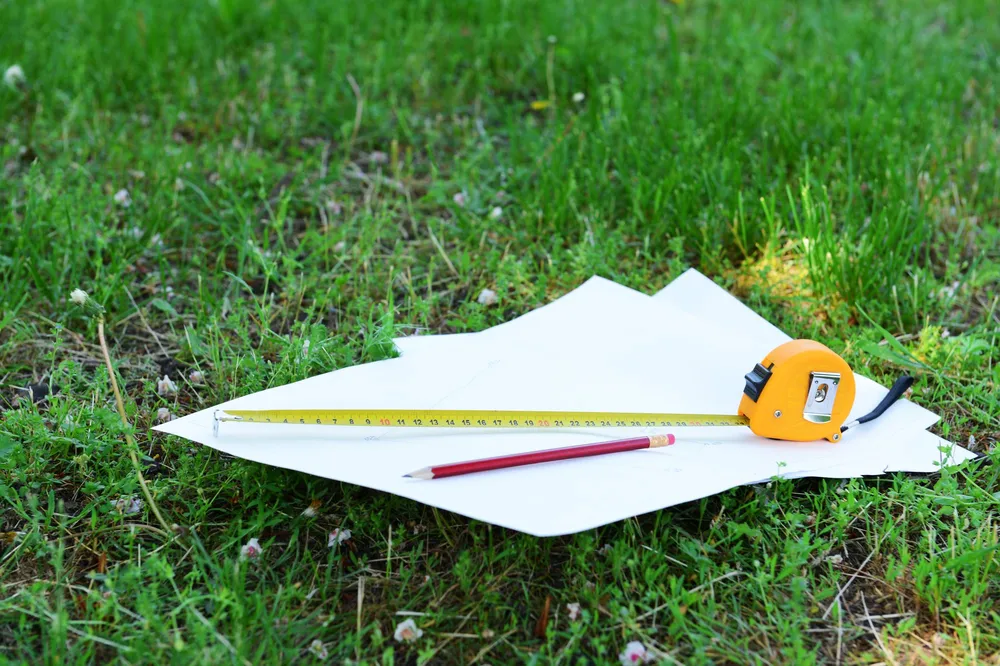
This is what lies behind a fixed figure: someone who has been on site, measured it and drawn it. Without that part, the number you’re given is an estimate under another name.
The way to save yourself the visit is to give them something to measure with: four decent photos, rough measurements and what you want to achieve. With that, most jobs can be given a fixed price without anyone travelling. What’s worth having answered before you call is in gardening prices.
And a warning that applies above all in these weeks: if what you’re having done is an after-summer tidy-up, ask for it at a fixed price and separately from the maintenance. Putting them into the same monthly fee costs you for twelve months (we cover it in a tidy-up and maintenance aren’t the same thing).
In short
If the job can be described, ask for a fixed price, even if on paper it asks a little more: that little is what it costs for the risk not to be yours.
If it genuinely can’t be described, hours are fine, but with a cap and a record. And if someone offers you hours with neither of the two, it isn’t that it’s cheaper: it’s that you don’t know yet what it’s going to cost.