Blog · Pruning calendar
When to prune roses on the Costa del Sol: in January, not March
Guides say February or March because you have to wait for the frosts to pass. Granada gets 48 days of frost a year; Málaga, 0.2. Here roses are pruned in January.
 By Sergio Domínguez6 min read
Most guides say roses are pruned in February or March, as winter comes to an end. On the Costa del Sol they’re pruned earlier.
The short answer: the main rose pruning here is done in January. A lighter one in August, if you want a good autumn flush. And all year round, taking off the spent flowers. Nothing hard in autumn.
Why the guides say March
Winter pruning waits for the end of winter for one reason: frost. A pruned rose shoots with the first mild weather, and if a frost comes after that, it kills the tender new growth. The gardening magazine Fine Gardening puts it like this: pruning too early can bring on new shoots during a warm spell that a frost then kills.
And inland it does freeze, and late into the year. Granada airport gets an average of 48.5 days of frost a year, according to AEMET, the Spanish met office: 16.8 in January, and still 3.8 in March. There, waiting makes perfect sense.
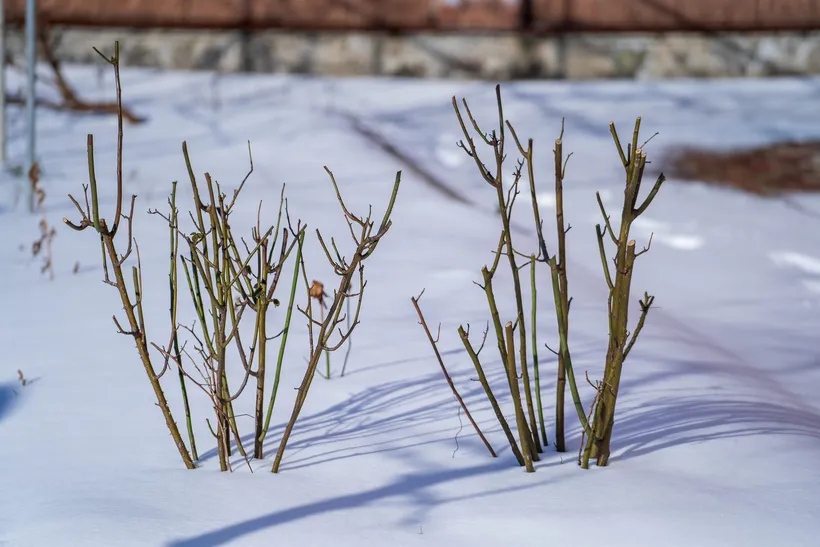
Two pruned roses, with snow all around. This is the winter almost every pruning calendar is written for.
Here there are no frosts to wait for
At Málaga airport the average is 0.2 days of frost a year. Close to the sea it almost never freezes, so the reason to wait until March simply isn’t there.
Why roses are pruned earlier on the coast
Each month’s frosts. Average days of frost at Granada and Málaga airports, December to April, according to AEMET, the Spanish met office. Granada gets frost all winter and still the odd day in March; Málaga, 0.2 days a year.
If you prune in January in Granada. The rose shoots with the first mild spell, and that tender February shoot runs into the frosts that are still to come. That’s why people there wait for them to pass.
Here, in January. In Granada pruning is left until winter is on its way out. On the coast there are no frosts to wait for: you prune in January and the rose shoots with nothing to burn it.
What’s left is to prune when the rose is at its most dormant, and here that’s January, the coldest month: an average of 12.1 °C at Málaga airport. It’s what’s done in other mild-winter climates too; in Fine Gardening’s guide for warm climates, the hard pruning is in January.
And pruning late has a cost. In March, with the temperatures here, the rose is usually already shooting, and what you cut off then is growth the plant has already paid for. If your garden is inland, where the odd January night gets close to zero, leave the pruning until the end of January or the start of February. The rest of the garden, month by month, is in when to prune on the Costa del Sol.
How the January pruning is done
- Out with anything dead, diseased, spindly or crossing. That comes first, and often it’s already a good part of the job.
- Open up the centre. Keep the healthy stems that grow outwards and remove the ones growing inwards, so air and light can get in.
- Cut just above an outward-facing bud, no more than 5 mm above it, with the cut sloping away from the bud so water doesn’t sit on it. The bud decides which way the new stem grows.
- Low, without fear. In Fine Gardening’s warm-climate guide they’re cut back to 18 inches, about 45 cm, at most. It looks like a lot, but a repeat-flowering rose flowers on what grows afterwards.
- Clear away the cuttings, so they don’t lie at the foot of the plant with their leaves.
This is the advice of the Royal Horticultural Society, and it works just as well here: what the climate changes is the when, not the how. If you’d rather we did it, it’s in hedge and shrub trimming.
If the rose is old or hasn’t been pruned in years
A rose that’s many years old tends to have thick grey stems that hardly flower any more, and stubs from old pruning that never shot again. In January those stubs come out, along with the old wood that no longer flowers, cutting from the base.
With a climber, the Royal Horticultural Society advises taking one or two of the oldest stems out at ground level and shortening the rest. That way the plant renews itself with new stems without suddenly being left with nothing. Each in its own season: in January if it’s repeat flowering, and after flowering if it flowers once.
The August one, lighter
Where roses flower for many months, a second, much gentler pruning in August is worth it: shortening the plant and taking out what’s not needed so it puts its energy into flowers, not stems. In the same Fine Gardening guide, that pruning brings a strong second flush in October.
Spent flowers, all year round
Removing flowers as they fade encourages the rose to produce more and stops it spending energy on making seed. You cut by the same rules as in winter: just above a bud or a healthy leaf, never leaving a long bare stub.
The ones that aren’t pruned like this
Roses that flower only once a year, like many old climbers, follow the rule for plants that flower on old wood: they’re pruned straight after flowering. Cut them in January and you lose that year’s flowers. Why, in what not to prune in autumn.
And not in autumn
Now, in autumn, the job is taking off spent flowers and little else. Repeat-flowering roses flower on what grows after the cut, and the hard pruning that gives them that growth is the January one.
In short
The guides say February or March because you have to wait for the frosts to pass. On the coast it hardly ever freezes, so the main rose pruning is done in January, the coldest month and the one in which the plant is most dormant.
Out with the dead wood and anything crossing, an open centre and the cut just above an outward-facing bud. In August, a light pruning for the autumn flush; all year round, the spent flowers. And the once-flowering ones, after they flower.