Blog · What it costs
A garden tidy-up and garden maintenance aren’t the same job, or paid for the same way
In September almost everyone asks for maintenance when what they need is a tidy-up. They’re two different jobs, and putting them into the same monthly fee costs you dearly twelve months running.
 By Sergio Domínguez8 min read
The September call is always much the same. Someone comes back, opens the garden gate, and what they find isn’t what they left in May. So they look for a gardener and ask for a maintenance quote.
And that’s where the trouble starts, because what they need isn’t maintenance. Or not only that.
Two different jobs with the same name
A tidy-up means taking the garden from where it is to where it ought to be. It’s a big job, it’s done once, and its size depends on how far the garden has slipped: not on how many square metres it has, but on the gap.
Maintenance means stopping it slipping again. It’s a small, repeated job, and its size does depend on the square metres and on how often it’s done.
Put like that, it seems obvious. It stops being obvious as soon as both go into the same monthly fee, which is how it’s quoted almost every time.
Why here it happens in every garden at once
Somewhere it rains in summer, a neglected garden shows it sooner and deteriorates unevenly: one does and the one next door doesn’t. Not here.
From May to September the only thing that has watered the garden is the irrigation, and that splits gardens in two. Where the irrigation worked, August has been a month of growth at full tilt: the hedge has got away, the lawn has shot up, the climbers have got in where they shouldn’t. Where it failed (a pump that stopped, a blocked line, a controller that reset itself), there’s no backlog: there are dead plants, and that’s no longer a matter of trimming.
On top of that, a good share of the houses on this coast stand empty in exactly those months. The owner hasn’t seen anything that has been happening, so there has been no correction along the way. The first time anyone looks closely at the garden is in September, and by then it’s four months in one go.
What hardly anyone believes: maintenance doesn’t raise the level
This is the point that makes this article worth writing. The word “maintenance” sounds as if the garden is going to get better: you hire it so the garden will be fine, so it will become fine.
It won’t. Maintenance does exactly what it says, which is to maintain. If it starts in September in a garden that has been going downhill for four months, that’s what it holds.
The same garden, two ways to get it done
From May to September the garden has gone downhill. With no rain, the heat bearing down and often nobody at home, that happens even if nothing has been done wrong.
Maintenance holds the level it finds. It does what it says: it maintains. If it starts now, every visit goes on not losing more ground, and the garden stays as it was on the first day.
Raising the level is a different job, and it’s done once. After that, maintenance does hold something worth holding. That’s why it pays to ask for the two separately.
Nobody is acting in bad faith. It’s arithmetic: a maintenance visit has the hours it has, and in a garden that’s behind they all go on catching up with what’s urgent. The lawn gets cut, the weeds on the paths come out, and there’s no time left for the hedge that needs rebuilding or the bed that needs replanting. Visit after visit, the garden stops getting worse and never gets better.
What usually happens next is that after three or four months the owner says they can’t see any change, and they’re right. And often they change gardener, and the same cycle starts again.
What each one involves
A September tidy-up usually includes restorative pruning of hedges and shrubs that have lost their shape, removing whatever hasn’t survived the summer, clearing what has turned into scrub, a serious check of the irrigation (which is where half of everything else starts) and, if there’s a lawn, deciding whether it’s brought back or redone. It’s a job of several days in a row, not of passes.
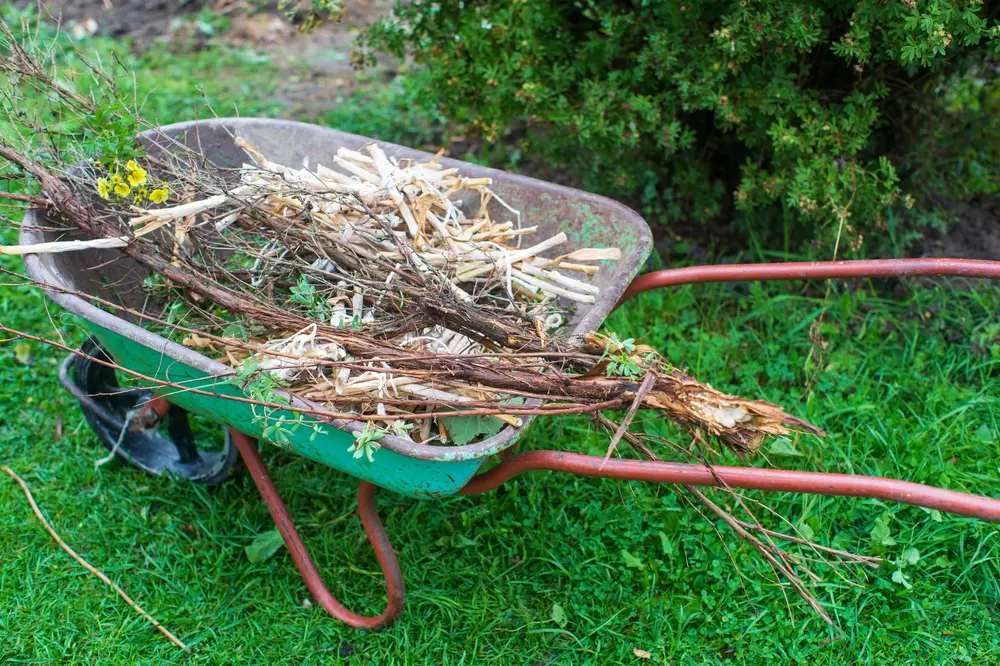
That doesn’t come from a trim. It’s old branches and pulled-up roots, and it’s the part of the difference you can see: what kind of job it is shows in what gets taken away, not in what gets cut.
Maintenance is the regular pass: mowing, trimming, weeds, a quick irrigation check and green waste removal. How often depends on the garden and the time of year, and that frequency is what really moves the number.
The irrigation deserves a word of its own, because it’s what gets underestimated most. If the backlog started with a fault, fixing the garden without fixing the irrigation means paying twice: next year you’ll be back in the same place. How to check whether the water is really getting through is in how much to water the garden in summer.
How to ask for it so you don’t overpay
Ask for the two separately. One amount for the tidy-up, with what it includes, and another for the maintenance from then on. If they come as a single monthly figure, you won’t know which of the two you’re paying for (and you’ll be paying it all twelve months, because a fee doesn’t come down on its own once the big job has been done).
Ask what happens to the fee afterwards. It’s the question that gives everything away. An honest quote answers that it goes down, or that it was always maintenance only and the tidy-up is separate. If the answer is that it stays the same, you know what you’re being sold.
Accept that the tidy-up can be spread out. Not everything is urgent in September. What can’t wait is the irrigation and anything that’s a hazard; the rest (replanting, redoing a bed, rebuilding a hedge) is better done in autumn, which is also when planting is done here. Splitting it into two or three rounds costs the same and turns out better.
And don’t ask for a price without photos. The gap can’t be described over the phone: “it’s a bit overgrown” means very different things. Four photos and rough measurements save a visit and, above all, save you a ballpark quote that later gets revised upwards. What’s worth having answered before you call anyone is in gardening prices.
In an owners’ community there’s an extra twist, because the decision is taken at the AGM and the quote goes into the minutes. There it’s best for the tidy-up to go in as a separate extraordinary item rather than inside the annual fee, for the same reason: what to check in your community’s gardening contract.
In short
In September almost everyone asks for maintenance, and what they have in front of them is two jobs. One raises the level and is done once; the other holds it and keeps going. Asking for them separately isn’t mistrust: it’s the only way to know what you’re buying, and to make sure next year’s fee is the one for maintaining a garden that’s already in good shape.