Garden renovation and construction
What decides whether it lasts is buried
Terracing, drainage, irrigation, paving, pergolas and lighting, in the order they have to be done. An open quote, broken down item by item.
- You see what each thing costs, not a total and a signature
- Water first, then what you walk on, and last what you look at
- Rubble removal included, on its own line
Tell us what you want to change
With photos of the plot and whether it slopes, we can already start talking.
What’s included
Four stages, and the order isn’t negotiable
They go in this order because each one buries the one before. Doing them the other way round means digging up the same metre twice, and you pay for it twice.
Earthworks and terracing
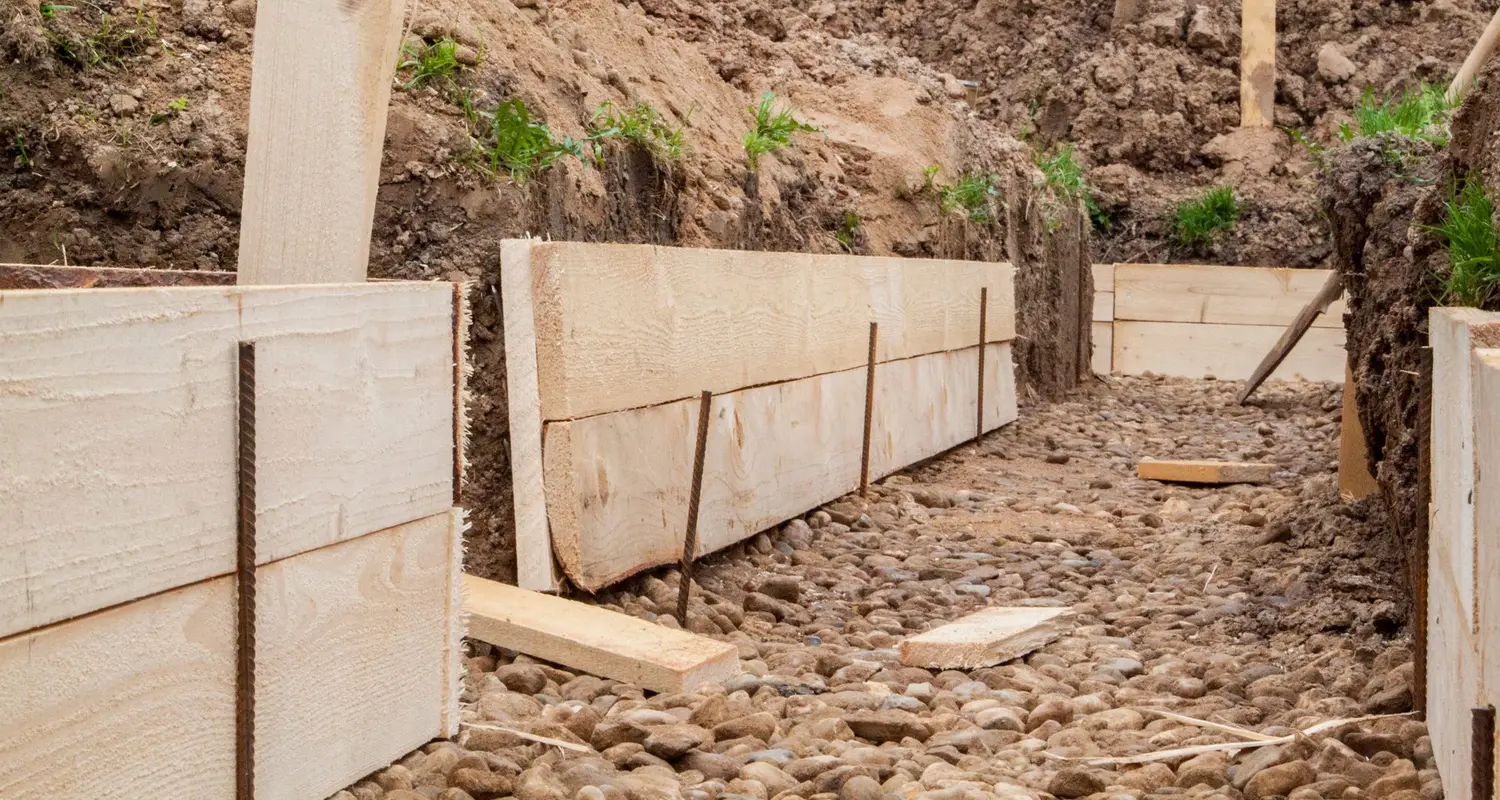
Reshaping the levels of a sloping plot and holding them up: walls, rock banks, steps. It’s the first thing to be touched, and the only thing that can’t be corrected later without starting again.
What goes underground
Drainage, irrigation pipe and ducting for the lighting. You can’t see it, you don’t show it to visitors, and it’s the part that decides whether the garden is still in one piece five years from now.
Paving, paths and gravel
Paving, edging, walkways and areas of gravel or bark. This is where you decide which part of the garden gets walked on and which part gets looked at, and how much there will be to maintain afterwards.
Pergolas and lighting
Built shade and outdoor lighting. They go in last, but the ducting they need has to be laid from the start, or you end up breaking up what has just been finished.
What’s unforgiving here
There’s no shortage of water: it all arrives at once
A garden on this coast spends half the year dry and then gets a good share of its rain in a handful of autumn storms. It isn’t light rain spread out over weeks: it’s a lot of water in a few hours, falling on a sloping plot that also takes whatever runs down from the plots above.
That makes a garden renovation a water job before it’s anything else. Handsome terracing with no drainage behind the wall holds water where it shouldn’t; paving with nowhere to drain sends it to the house or to the neighbour’s; gravel laid on compacted soil washes away and turns up further down. The water will get through either way: the question is whether it goes where you’ve decided.
And that’s the reason for the order. All of this is solved underground, and it’s buried right under the things people look forward to most: the paving, the lawn, the planting. When you start with those (which is normal, because they’re what you see), the drainage ends up as a patch added afterwards, breaking up what has just been done.
It proves itself. After the first big autumn storm you can see which gardens on the urbanisation were built in the right order and which weren’t: some wake up looking just the same, others with their gravel in the street.
Let’s talk about price
Item by item, which is why there’s no price per metre
A fixed total with no breakdown is easy to read and tells you nothing. What makes a quote comparable is seeing what each thing costs, because then you can also see what’s been left out to make it cheaper.
- The slope. It’s the first question. Holding up levels on a sloping plot is real construction, with a wall and drainage behind it, and it’s nothing like the same area on flat ground.
- Whether machinery can get in. On many plots nothing bigger than a wheelbarrow gets in. Then the soil, the gravel and the rubble are moved by hand, and that’s hours, not materials.
- What’s underneath. In urbanisation gardens, what turns up when you dig is usually builders’ fill full of rubble, and sometimes rock. One gets dug out, the other has to be broken up: they don’t cost the same.
- Whether something has to be demolished first. Renovating isn’t building from new. Lifting what’s there, getting it off the plot and disposing of it is a line item of its own, and in a renovation it’s usually one of the first.
We come out, take a look and send you the quote item by item, with the order the work will be done in. If something can be left for a second phase without spoiling what’s gone before, we’ll tell you. How each service is measured is explained in gardening prices.
Before the build
This page is about building it
If it isn’t settled yet what goes where, that comes first, and it’s a different job: landscaping and garden design. And if someone else has already done the design for you, it works as it is: we build from it.
Where we work
The slope changes from one town to the next
A hillside plot isn’t the same as a flat one by the beach. Each page covers what we find in that area.
To make sense of it
We explain it rather than hide it
Before you pave the garden: where the water is going to go
The question people start with is usually which material to use. The one that decides the result is another: in the first October storm, where does the water that floor no longer soaks up end up?
Read itBuilding work at home: what breaks in the garden and doesn’t show until July
Here houses get renovated in autumn and winter, with nobody in them. The garden becomes the storeroom, and what really breaks doesn’t show itself until the first summer.
Read it
Common questions
What people ask us most
Can you do just one part, without the whole job?
Yes, as long as that part doesn’t depend on another that’s being left undone. A pergola or an area of gravel can be done on its own without any trouble. What makes no sense is planting or paving an area where a trench will later have to be dug for the irrigation or the lighting, because you pay twice for the same metre. When that’s the case, we say so before we quote.
Do I need a licence or permit?
It depends on what’s being changed and which municipality you’re in, and it varies between neighbouring town halls. As a rule, the more it looks like building work (retaining walls, earthworks, permanent structures), the more likely it is that something has to be applied for. What we do is tell you which items in your project fall into that category, so you can check with your town hall (ayuntamiento) before work starts. We don’t take for granted what we don’t know.
What if machinery can’t get into my garden?
It can still be done, but it’s a different job and that has to be said from the start. On many hillside plots nothing bigger than a wheelbarrow gets in, so the soil, the gravel and the rubble go up and down by hand or with compact machinery. That doesn’t make the materials dearer: it adds hours, which is why it goes in the quote as its own line item instead of being hidden in the price per metre.
Is there a better time of year to do it?
For the construction part, as soon as you can: working with open trenches once the storms arrive complicates everything, and some days are simply lost. For the living part (what gets planted at the end), autumn is the right time here, because a plant that goes in then has warm soil and the whole winter to settle in before its first summer. When it fits, the two put themselves in order: building first, planting after. Why we plant in autumn here.
Shall we start in the right order?
Send us photos of the plot, slope included. We’ll tell you which stages it needs and what order they go in, before we talk numbers.