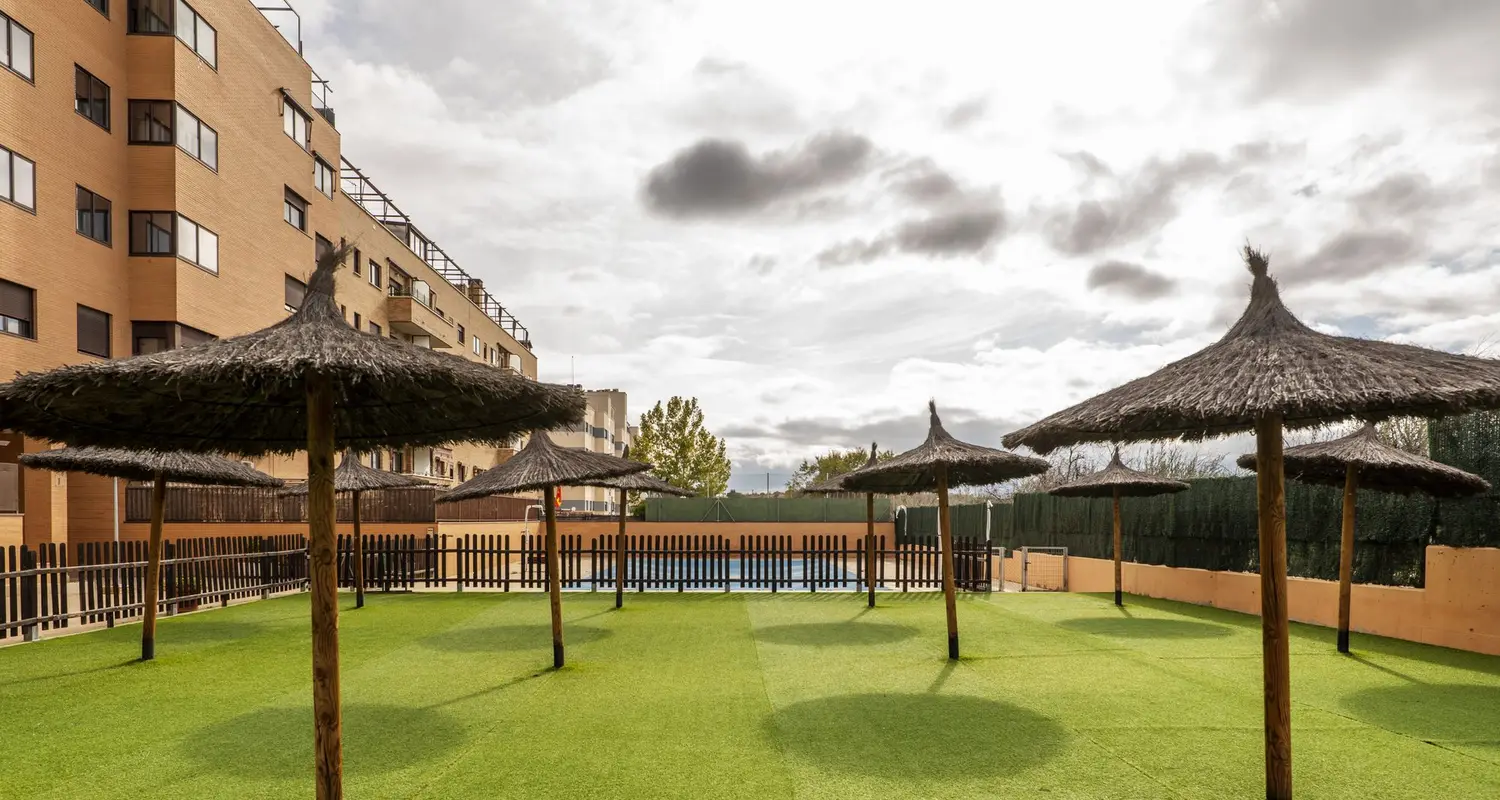
Lawn care and cleaning
Artificial grass too. Yes, really
Brushing and deep cleaning for artificial; scarifying, aerating and overseeding for natural. Written quote within 24 hours.
- One-off jobs quoted apart from the contract, not lost in the monthly fee
- Natural lawns done in autumn, when they’ll thank you for it
- Green waste removal included
Tell us what kind of lawn you have
Natural or artificial, how many square metres, and how long since it last had a proper going-over.
What’s included
Two materials, four jobs
This isn’t the weekly mow: it’s the once- or twice-a-year jobs that decide what that lawn looks like five years from now.
Brushing artificial grass
Lifting the fibre flattened by foot traffic and by the weight of the infill itself. It’s what brings the look back, and what stops the busiest areas from staying flat and shiny for good.
Deep cleaning
Getting out everything that has worked its way into the fibre: dust, pine needles, seeds and whatever the wind brings. It’s the part that decides whether it drains or floods at the first heavy downpour.
Scarifying and aerating natural lawns
Pulling out the thatch, the mat of old stems, and relieving compaction. Without it, the water stays on top, the roots come up to find it, and the lawn spends the next summer with its roots where it’s hottest.
Overseeding and top dressing
Filling bare patches and levelling with a thin layer of sand or compost. In an established lawn the seed has a safety net, because the grass around it gives it shade and holds in the moisture.
What the brochure leaves out
“Maintenance-free” doesn’t exist
Artificial grass is sold with that phrase, and it isn’t true. What is true is that it needs a lot less: no mowing, no feeding, no watering. But it only needs nothing in the brochure.
And what dirties it here isn’t what dirties it further north. It isn’t autumn leaves, which you sweep up and that’s that. It’s fine airborne dust, pine needles and salt, which fall all year round, work their way into the fibre and stay there, because from May to October the rain that would wash it through on its own in another climate doesn’t come.
That has two consequences that show up late. The first is cosmetic: the fibre mats, loses its spring, and the walkway goes flat and shiny. The second is worse, because the drainage holes gradually clog up and the water stops getting away: a smell appears, moss appears in the shady areas, and the puddle that used to last ten minutes starts lasting all afternoon.
None of this happens overnight, and none of it means doing something every month. But a brush and a deep clean now and then are the difference between grass that still looks new after eight years and grass that looks like an old carpet after three. We’re saying it here, on the page where we sell you that work, because it’s what nobody will tell you when they install it.
Let’s talk about price
Here the square metres do matter, but not on their own
It’s one of the few services where the size of the area explains a good part of the price. The rest comes down to the state it’s in, which you can’t see on a plan.
- How long since it was last touched. The first visit to a neglected lawn is always the expensive one. The next ones, once it’s on a cycle, cost a fraction of that.
- Which material it is. Scarifying natural grass and deep-cleaning artificial are two jobs with different machines. In a garden with both, they’re quoted separately.
- Whether the infill needs topping up. With artificial grass, the silica sand disappears over the years and with each clean. Topping it up is a separate material cost and isn’t always needed: we check first.
- How much comes out. Scarifying pulls out a volume of thatch that surprises everyone. It gets taken away, and that’s stated in writing from the start.
We come and look at it and tell you whether it needs doing now or can wait until next season. Either answer is a proper answer.
Where we work
Not every plot gets dirty the same way
A windy, dusty penthouse terrace is nothing like a plot under pine trees. Each page explains what changes in that area.
To do it yourself
Much of it you can do without calling anyone
We explain it all, including how to tell whether your lawn needs it.
Reviving a lawn after summer: what to do in September
Before you buy a bag of seed there’s one question to answer: does your lawn look bad in summer or in winter? Depending on which, the September plan is the opposite.
Read itWhat height to cut the lawn, and why scalping it costs you in water
The cutting height is the cheapest adjustment there is in a garden and hardly anyone touches it. Here it decides how much water you’ll have to put down for the rest of the summer.
Read itLawn fungus in autumn: why it appears now and what to change in the watering
Overnight mushrooms and patches that spread in a circle are two different things. The one that harms the lawn appears in October because of how it’s watered.
Read itScarifying a lawn: when it’s due here, and when it isn’t needed
Only if the thatch is more than about a centimetre thick, and while the grass is growing: on this coast, winter grass now, in October, and summer grass in late spring.
Read it
Common questions
What people ask us most
Does artificial grass really need maintaining?
Yes, even though it’s sold as if it doesn’t. It needs a good deal less than a natural lawn, with no mowing, feeding or watering, but not nothing. The fibre flattens where people walk, whatever the air brings in builds up between the strands, and moss appears in shady areas. Regular brushing and deep cleaning keep the look and, above all, the drainage. It’s the difference between grass that looks new after eight years and grass that looks like an old carpet after three.
When should a natural lawn be scarified?
In autumn, and here it’s one of the most rewarding jobs of the year: the soil is still warm, the heat has eased off and the lawn has good months ahead to recover before the next summer. Doing it in spring works too; doing it in June means opening wounds just before the worst time of year.
I’ve got moss on my artificial grass. Is that normal?
It happens, and almost always for the same reason: it’s an area that doesn’t see the sun and also holds moisture, because the drainage has gradually clogged. It can be cleaned off, but if the drainage isn’t sorted it comes back. When the area is in permanent shade, sometimes the honest conversation is that it wasn’t the best material for that spot. Where artificial grass is worth it, and where it isn’t.
Is it included in a maintenance contract?
Mowing and the regular tidy-up are. Scarifying, aerating and deep-cleaning artificial grass are one-off jobs, once or twice a year, and they’re quoted separately so you can see them in the quote instead of having them lost in the monthly fee. If you already have a maintenance contract, they’re fitted into the calendar when they’re due.
This is the month for natural lawns
Scarifying in autumn gives the lawn good months to recover before next summer. In June, it means opening wounds just before the worst time of year. You can call or WhatsApp us in English.