Olive and fruit tree pruning
The same tree, two opposite ways of pruning it
From the villa’s ornamental olive to the finca’s olive grove, by way of the fruit trees in the orchard. Written quote within 24 hours.
- First we ask what that tree is there for
- Each fruit tree in its own window, not all in one round
- Green waste removal included
Tell us what trees they are
How many, what kind, and whether they’re in a garden or on a finca. That’s enough to start talking.
What’s included
Four jobs that have nothing in common
They’re on the same page because the same client asks for them, not because they’re done the same way. What works for one ruins the one next to it.
Ornamental olives
The one at the villa, bought fully grown and transplanted. It’s pruned to keep its silhouette, thin the crown and let the light in, not for a crop. An ornamental olive pruned like a productive one loses the shape you paid for.
Olive groves for harvest
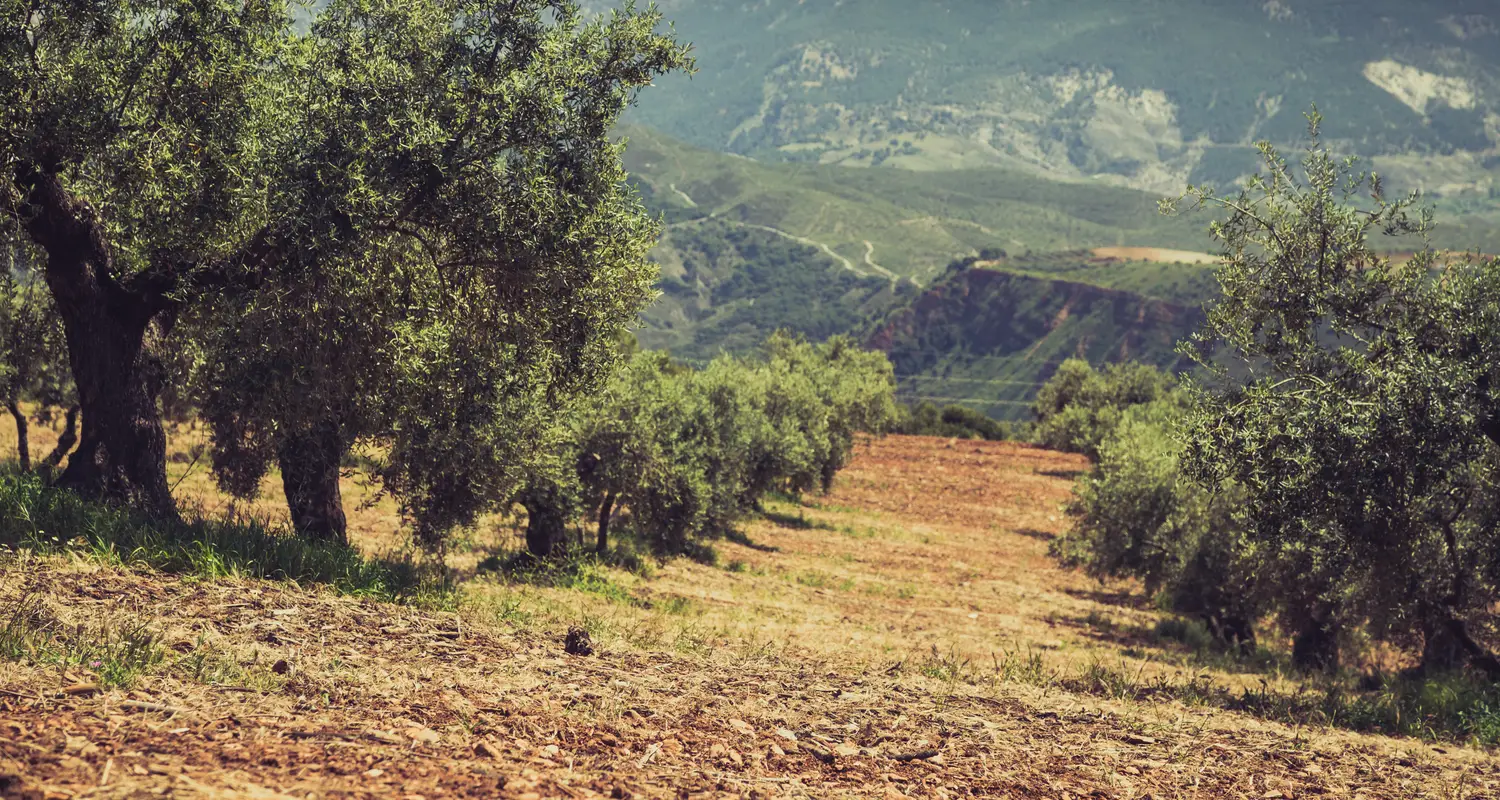
The one on the finca. Here it’s pruned to renew the wood that bears fruit and to let air move through the inside of the tree. It’s a different job, with different criteria and a different time of year.
Stone and pip fruit trees
Citrus, almond, fig, avocado. Each one has its own way of fruiting and its own window, and putting them all through the same winter round is the quickest way to end up with no fruit.
Suckers and water shoots
What comes up from the base and from where the main branches fork, every year. Taking it off in time is a small, frequent job; leaving it for two years turns the tree into a thicket and the next pruning into a major undertaking.
What to ask first
Here the olive is two different trees
Within twenty kilometres of each other, this area has two worlds that elsewhere are provinces apart. On the coastal urbanisation, the olive is a piece of decoration: it was bought fully grown, brought in on a lorry and planted for its twisted trunk and its shape. Nobody expects olives from it.
Up in the valley, the same tree is a crop that’s expected to give a harvest, and that has been pruned for exactly that for generations.
And the two kinds of pruning go in opposite directions. Ornamental pruning respects the silhouette, thins to let the light in and leaves alone whatever gives the tree its character. Production pruning goes in to renew the fruiting wood and opens up the centre with no regard for shape. Each one applied to the other’s tree does real damage: in a single morning it strips the ornamental tree of the twenty years of shape that were paid for when it was bought, and it leaves the productive one looking pretty and with no harvest.
It sounds obvious put like that, and yet it’s the mistake you see most, because someone used to pruning olive groves prunes olive groves everywhere. That’s why the first question isn’t how many trees there are: it’s what they’re there for.
Let’s talk about price
Per tree or per day, and it matters which
Four olives in a garden are quoted per tree. A finca with a hundred isn’t. Mixing up the two units is where the surprises come from, in both directions.
- How long since it was last pruned. A tree on a regular cycle is gone over quickly. One left for several years is a recovery in stages, because taking it down in one go takes its toll.
- Ornamental or production. Looking after a silhouette that has to be respected isn’t the same as a renewal pruning, even if the tree is identical.
- The volume of waste. Olive pruning produces a lot of wood and a lot of brushwood. It can be chipped on site, the wood left stacked for whoever wants it, or loaded up and taken away: that’s three different prices.
- Access to the finca. On a large plot, what matters is whether the vehicle can get to the trees, or whether the tools and the waste have to go back and forth on foot.
We come, look at them and send you the price in writing, in the right unit and with what will be done to each tree. We explain why the unit matters so much in gardening prices.
Where we work
The coast and the valley need different things
It’s the service where you notice the difference most between going down to the urbanisation and up to the finca. Each page covers what changes there.
To understand it
We explain it, we don’t hide it
The olive tree that’s loaded one year and gives nothing the next
It isn’t sick and it isn’t short of water. The year it loads up with olives it spends what it needed to prepare the next one, and enters a seesaw that feeds itself.
Read itOlive leaf spot is decided now, with the first rains
The spot shows in spring, so everyone looks in spring. But olive leaf spot gets in with the first autumn rains, and the garden olive on this coast makes it easy.
Read itWhen to pick the olives on your garden olive tree (and why by hand)
There’s no single date: it depends on what you want them for. Green, turning or black, how to tell from the tree, why by hand and not with a pole, and what to do if the olive is only ornamental.
Read itThe lemon tree’s leaves turn yellow and the veins stay green
The iron is already in your soil. The problem is that in chalky soil the roots can’t take it up, and that’s why the bag of iron sulphate did nothing.
Read itYour oranges and lemons are splitting: it’s the watering, but not the way you think
They appear split overnight, almost always after the first storm. The cause isn’t a lack of water: it’s getting all of it at once.
Read itWhen to pick avocados from the garden, and why they don’t ripen on the tree
On the tree it doesn’t soften: you pick it hard and it ripens in the kitchen. When Bacon, Fuerte and Hass are due, and the fruit test to tell whether yours is ready.
Read itWhen to prune a lemon tree, and what comes off in any month
Pruned lightly, from February to April, and not in summer. What does come off in any month is suckers: the ones below the graft are another plant.
Read it
Common questions
What people ask us most
I have an olive tree in the garden. Do you prune it like the ones in the fields?
No, and it’s the most common confusion. A garden olive is there for its shape and its trunk, so the pruning is about silhouette, balance and stopping it closing up inside. Production pruning opens the tree up in a different way, sacrifices shape to renew fruiting wood and leaves it looking like something nobody wants on a terrace. Before we touch anything, we ask what that tree is there for.
When are olive trees pruned here?
Away from frosts and away from strong heat, which on this coast leaves a wide window from late winter to spring. What is worth avoiding is pruning when the tree is in full flower or setting fruit, and doing it in high summer, when the cut costs the tree more and the wounds take longer to close.
One year it gives loads and the next year nothing. Is that normal?
It’s normal, and it has a name: alternate bearing. The tree empties itself in the big harvest and the following year it has no reserves to do it again. It isn’t fixed with fertiliser or more water; it’s evened out with pruning and with what is done in the year of the big harvest. We’ve written it all up separately. Here it is.
The leaves are looking strange and I can see lumps on the branches
That needs to be seen before we say anything, because olives and fruit trees have several different problems with similar symptoms, and the answer changes completely from one to another. What we can say from the outset is that pruning is part of the control: diseased wood out, air into the tree, and no prunings left lying around the base. For any treatment, you need to go to someone who holds the relevant applicator’s licence.
Ornamental or for the harvest?
If you’re not sure, send us a photo of the whole tree. We’ll tell you what you have and what pruning it needs, before we talk about price.